When the Numbers Feel Small: Why Your Workout Matters More Than Calories Burned

Updated: Jul 14
I cannot tell a lie.
I’m a little bit competitive.
And the offer was just too enticing.
Over the last few years, I had gotten into a pretty good routine of exercising in the morning. I fell in love with fitnessblender.com and their free exercise videos. And no, I’m not getting paid to say that – I mean it! There’s such a good variety for every fitness level. The instructors are modestly dressed – yes, that matters to me. And there’s no music, so you can add what you like. They are also great teachers while you are exercising… and there are literally hundreds of free videos, or you can pay a small fee for structured, curated exercise programs.
I honestly can’t say enough about how I’ve enjoyed their exercise videos, so I’ll just put the link here so you can check it out yourself: www.fitnessblender.com
At the beginning of summer, I had a big list and great plans for all of the things I thought I would accomplish during my “lazy days of summer.” I’m not sure who actually has a whole lazy summer, but I had my list and three months ahead of me. Then stress hit. Difficult things in our life piled on. It seemed like the days were too full of just coping and getting life done, and I couldn’t bring myself to exercise anymore.
As a chiropractor, I would have told someone that this would be the most important time to add exercise in — so I started walking Percy more consistently than ever before, but the strength training, cardio, Pilates, stretching… they were all left behind for “get up and just get going.” That was all I felt I could manage.
Then fall came. Back to school, and a local marathon weekend began to loom. A friend who had been jogging poked a little…
“I bet I could beat you at the 5K on marathon weekend.”
“Really,” I responded, “You’re just trying to get me to run.”
“No, I really think I could beat you,” was the reply.
I couldn’t resist.
I was starting to get my clearer head back, and a 5K is actually only 3.1 miles. I was already walking Percy a mile and a half each day. Double that and we’re on our way.... Five weeks to train.... We live in a mountainous area, so if I could pull off three miles in the hills, it would make my time even faster at the 5K. I was committed.
What I didn’t remember in this burst of motivation was that at age 51, my body doesn’t respond quite as quickly as it did when I was 24. But the next morning, I began.
The first day I decided I would run four minutes, walk one, and only go a mile and a half. The first one-third of a mile is straight uphill. After about 25 minutes I arrived home winded, pink in the face, and satisfied with my accomplishment… until I looked at my tracker. 133 calories burned.
That’s IT??!!!
I was ready to go back to bed, and I hadn’t even expended enough energy for the little bowl of ice cream I’d indulged in the night before.
I was disappointed.
No, crushed.
Because let’s be honest. I have about ten pounds I was also hoping to shed during this process, and when I awoke the next morning sore in places I forgot I had — with only 133 calories to show for it — I wasn’t exactly chomping at the bit to don my running shoes again. All work and no pay.
Can you relate? Have you spent weeks following a new exercise program only to hop on the scale and feel like you failed?
Maybe you aren’t training for a marathon (or even a 5K). Maybe you’re thinking, “Gee, just walking to the end of my driveway is a problem. Where would I start? Why even bother?”
Let me help you make a mental shift and give you lots of reasons to clear that space in your living room for Pilates, or book that new class at the gym.
It’s NOT Just About the Calories
1. Metabolism shift. When you start exercising regularly, your metabolism begins to adapt. It’s called “Excess Post-Exercise Oxygen Consumption” (EPOC), and it primes your body to keep burning calories at a higher rate for hours after your workout. It’s not massive, but it adds up.
2. Stronger muscles, stronger body. Every workout strengthens muscles, tendons, and even increases bone density. This not only helps prevent bone loss with age, but also improves balance (fewer falls!) and builds lean muscle — which raises your resting metabolic rate. Translation: you burn more calories even when you’re not exercising.
3. Better glucose handling. Cardio exercise trains your body to process glucose more efficiently. This means steadier energy, fewer blood sugar highs and lows, and less fat storage. (Good-bye to those stubborn pounds!)
4. Lower stress, better sleep. Movement rewires stress pathways and improves sleep quality. This affects appetite and even what you crave. Personally, I find that when I’m exercising regularly, junk food is less appealing. Hormones, stress, sleep, and mood — they’re all influenced by exercise.
Exercise Is an Investment, Not a Transaction
Our workouts — whether it’s a walk to the end of the driveway, a class at the gym, or training for a marathon — are investments in a stronger body, not just calorie transactions. Every bit of effort builds a healthier, more efficient system over time.
You’re teaching your body to handle fuel better. Even if you eat a high-calorie meal (and no, this isn’t permission to live on those!), your body is better equipped to use those calories instead of store them.
A Quick Look: What Different Activities Do for You
Activity | After-Effect |
Walking (3 mph) | Lowers cortisol, aids digestion, improves mood |
Jogging (~5 mph) | Builds endurance, strengthens heart & lungs |
Running (~6 mph) | Boosts VO₂ max, trains stamina, supports fat use |
Strength Training | Builds lean muscle, raises metabolism (combine with cardio for best results!) |
Pilates / Barre | Improves posture, core strength, and flexibility |
Cycling (casual) | Gentle on joints, tones legs, improves circulation |
HIIT / Intervals | Major afterburn — metabolism stays higher 24–36 hrs |
Yoga | Reduces stress, improves flexibility, balances hormones |
So the number I saw on my fitness tracker? Just the starting line, not the finish line.
Looking at this chart also reminds me that variety is the spice of life!
Mixing things up will do more for long-term fat metabolism than running alone.
My own schedule looks like strength training 2–3 times per week, interval training 1–2 times per week, and daily movement like light walks with Percy (he nudges me to remind me). Add in stretching or gentle core exercises, and it keeps things interesting and hits every part of your body.
The Moral of the Story
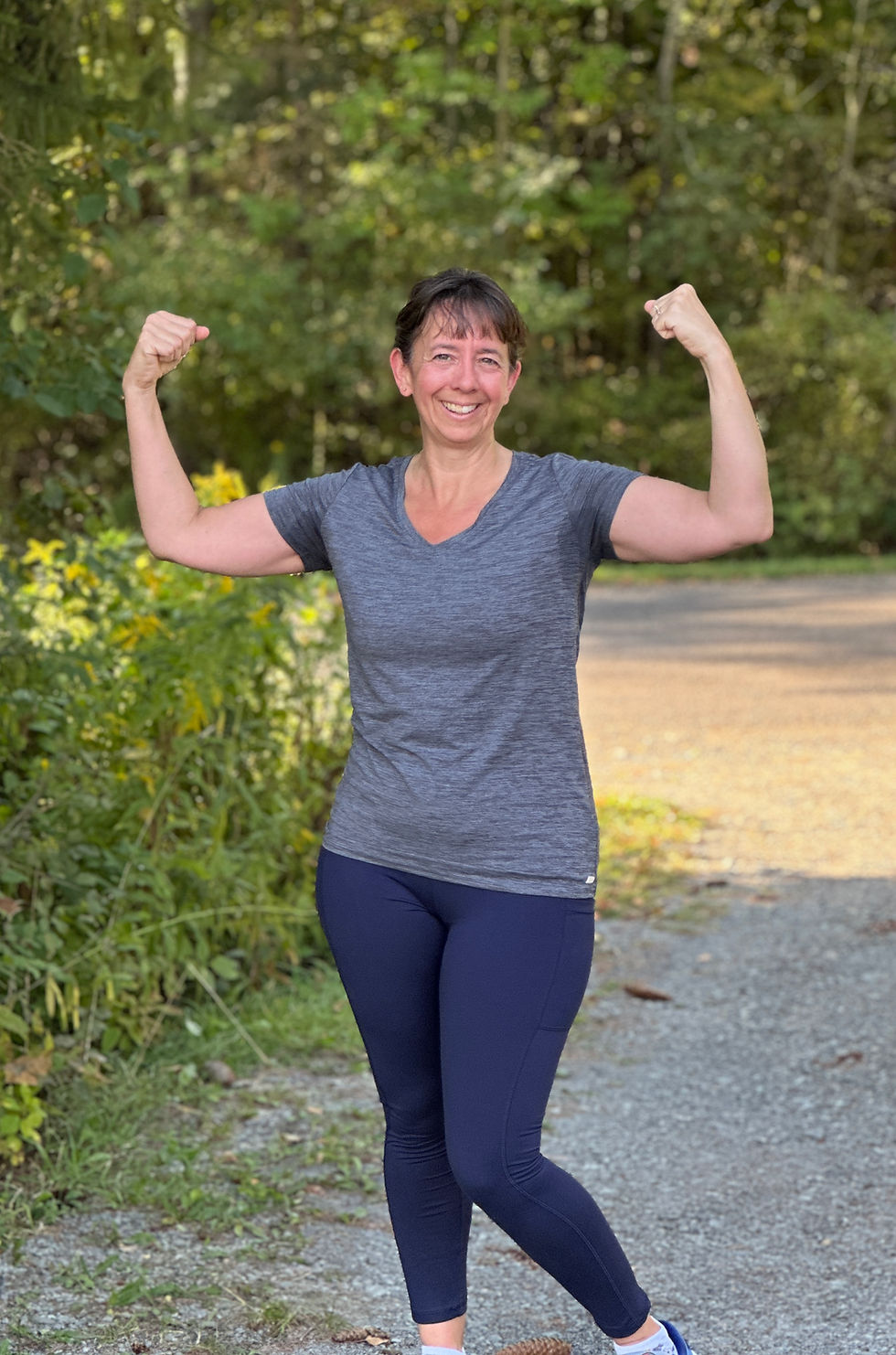
Movement is a way of loving your body. Do it however, whenever you can.
Your worth isn’t measured by calories burned or pounds lost. Your run, your walk, your stretch — they’re all investments in helping your body work the way it was designed to.
It’s a journey. Enjoy it.
I’m adopting a new mindset. Instead of:“This run didn’t even burn off that ice cream…”
I’ll remind myself:“This run taught my body how to use food better all day.”
And I’m deleting the tracker.
If you want more simple, grace-filled ways to rethink health, grab my newsletter here:
Subscribe!

Comments